


Air Jordan vs Standard Nike Shoes: Essential Differences Decoded
Visit any sneaker shop in 2026 and you’ll see Air Jordans alongside standard Nike sneakers like the Air Force 1, Air Max, and Dunk — but despite sharing a corporate parent, these products occupy markedly different worlds in terms of design, cost, cultural significance, and consumer base. The confusion is understandable: Jordan Brand functions under the Nike roof, every Air Jordan features Nike Air technology, and both brands share manufacturing infrastructure. Yet the contrasts are meaningful and deserve your attention, notably when figuring out where to invest your shoe budget. Air Jordans come with elevated asking prices that can be two times or three times comparable Nike shoes. This deep dive explores the primary distinctions across brand DNA, creative direction, technology, price tiers, cultural weight, and resale dynamics.
Brand DNA and Organizational Structure
Jordan Brand operates as a branch of Nike, Inc., but acts with substantial freedom influencing design direction, marketing, and sales distribution. Nike secured exclusive licensing to Michael Jordan’s identity in 1984 with a five-year, $2.5 million agreement that has since grown into a relationship worth an reported $150 million per year in licensing royalties to Jordan himself. In 1997, Nike formally spun the Jordan line into its own entity with a dedicated creative team, promotional team, and brand president — presently Craig Williams, who manages a brand that generated approximately $6.6 billion in revenue during fiscal year 2025. General Nike shoes function under the broader Sportswear and Basketball divisions, sharing resources and brand capital across dozens of product lines from track to training to casual. The Jumpman logo — drawn from a famous photo of Jordan during the 1988 Slam Dunk Contest — is legally distinct from the Nike Swoosh and conveys a separate brand identity that customers regard as more elite and premium. This corporate structure means Jordan Brand governs distribution nike jordans more strictly, limiting supply to uphold demand in ways that the general Nike roster, with its wide-distribution strategy, rarely does.
Design Philosophy and Aesthetics
The design approach behind each brand differs at a core level in creative source and design ambition. Every numbered Air Jordan silhouette was designed to capture Michael Jordan’s personality and interests — the Jordan 9 took cues from worldwide cultural symbols, the Jordan 15 from a F-15 jet, the Jordan 33 from space exploration. Nike’s general offerings emphasize versatility and universal attraction, creating classic designs like the Air Force 1 and Air Max 90 that are neutral rather than theme-based. Jordan Brand employs a smaller design staff that outputs fewer models but dedicates more effort into each, producing more powerful design identities. Fabric selections on Jordans tend toward the bold — patent leather, elephant print, carbon fiber — while Nike mainline shoes stick to proven materials. Collaboration strategies also differ: Jordan partners with high-end labels like Dior and A Ma Maniére, while Nike teams up more expansively across athletes and artists.
Innovation and Performance
Both brands employ Nike’s exclusive technologies, but how they deploy it vary. Jordan court shoes commonly launch innovations first — the Jordan 28 premiered a Flight Plate that eventually influenced Nike’s larger catalog. Jordan’s court shoes integrates Zoom Air, React foam, and Formula 23 midsole tech in distinct setups. Standard Nike basketball shoes like the LeBron and KD models use the same core tech but are tuned for different athletes’ body mechanics. For everyday and retroed shoes, the difference tightens — a retro Air Jordan 1 and an Air Force 1 both employ standard encapsulated Air. Nike’s running arm leads in midsole innovation with ZoomX and Alphafly, technologies missing from Jordan products since the line doesn’t produce running shoes. The bottom line: for basketball, both brands deliver competitive tech, but Jordan channels innovation on a smaller catalog.
| Feature | Air Jordan | Mainline Nike |
|---|---|---|
| Average Retail Price | $180–$250 | $90–$180 |
| Annual Revenue (2025) | ~$6.6 billion | ~$45 billion (total Nike) |
| Supply Strategy | Limited, controlled | Mass-market + limited |
| Primary Logo | Jumpman | Swoosh |
| Typical Resale Premium | 120–400% of retail | 80–150% of retail |
| Core Audience | Sneakerheads, 18–40 | Broad consumer base, all ages |
| Product Categories | Basketball, Lifestyle, Golf | Running, Basketball, Training, Soccer, more |
Pricing and Value Proposition
The cost difference is one of the first details shoppers pick up on. In 2026, Jordan retro releases retail between $180 and $250, while similar Nike casual shoes sit between $110 and $170 — a 40-60% price increase for the Jordan name. This markup accounts for higher-quality materials, more restricted production, Jordan royalty costs, and cultural prestige that drives willingness-to-pay. For performance basketball, the difference is smaller — a Jordan Tatum 3 retails around $130 while a Nike KD 17 retails for $150. The cost-benefit analysis changes enormously on the secondary market, where scarce Jordans routinely sell for 200-500% of MSRP while most Nike mainline models fall below retail within a few months. For raw performance at a fair price, Nike presents stronger cost efficiency; for prestige and investment upside, Jordans justify the premium.
Cultural Impact and Social Currency
The cultural capital of Air Jordans far outweighs any regular Nike product line. Jordans are connected with Michael Jordan’s legacy — six championships, five MVPs, ten scoring championships — and every pair holds an inherent connection with the best athlete of the 20th century. In the music world, Jordans have been name-dropped in over 5,000 rap tracks since 1985, compared to approximately 2,000 for all other Nike models collectively. The sneaker resale business, valued at over $10 billion in 2026, draws 35-40% of transaction volume from Jordan releases on platforms like StockX. Digital media paints a like story: Jordan release announcements generate 3-5 times more engagement than equivalent Nike mainline releases. Having on Jordans communicates entry in a unique group and recognition for sporting history that rises above the actual shoe.
Resale Market Dynamics
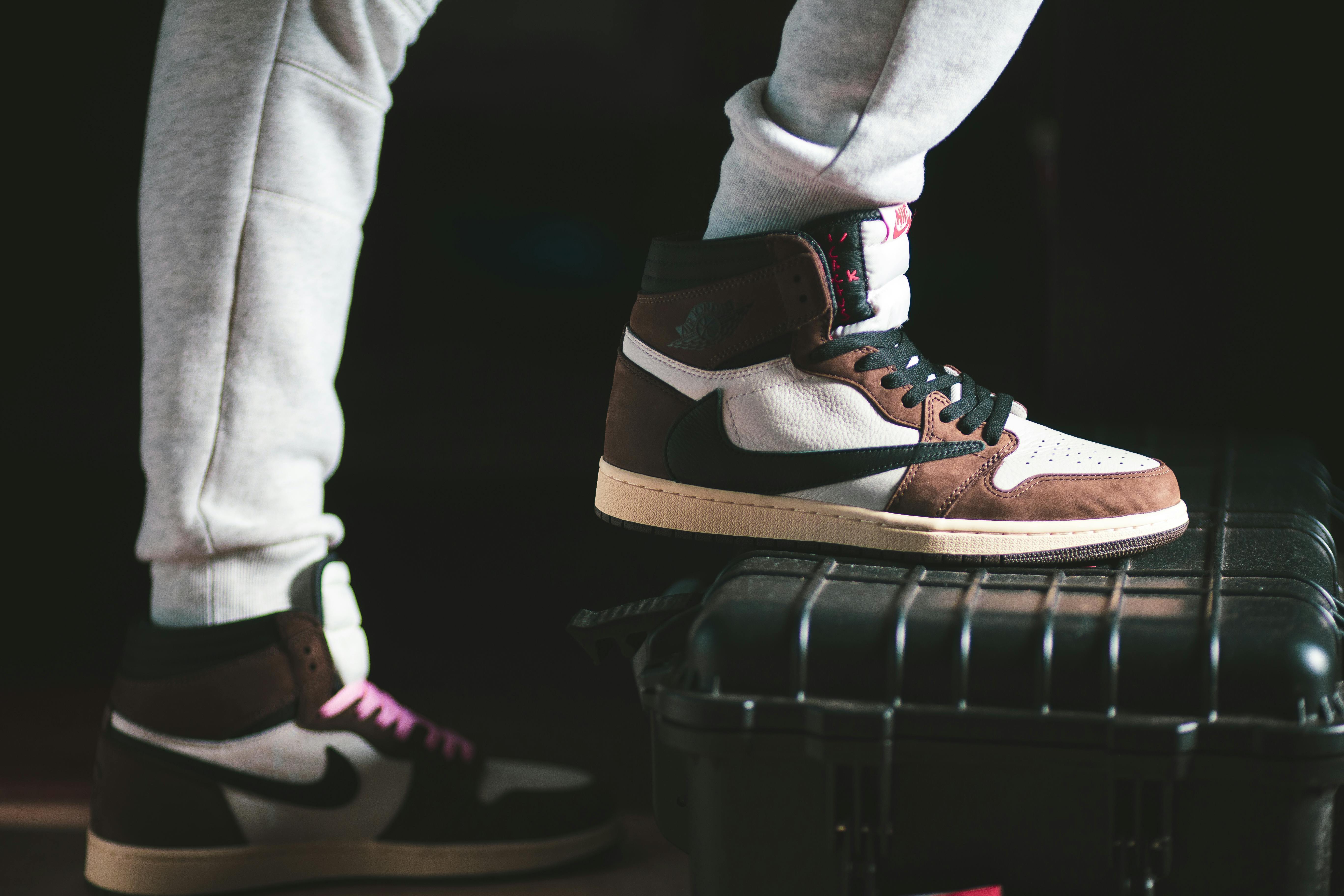
The secondary market is where the distinction grows most quantifiable. Limited Jordans are depleted within moments and command markups of 50-300% on secondary market platforms, while most Nike drops linger available at or under retail for weeks. StockX pricing data indicates the average Jordan retro keeps 120% of MSRP one year after launch, while the average Nike casual sneaker retains only 75%. The most notable example: the Travis Scott x Air Jordan 1 Low „Reverse Mocha“ topped out at $2,100 — roughly 1,400% of its $150 retail. Even successful Nike collaborations like Off-White Dunks hardly ever break 500% of MSRP. For shoppers viewing sneakers as investment vehicles, Jordans provide a persuasive case, though widely available models can also dip below MSRP.
What Label Should You Pick
The „superior“ option depends entirely on your needs, routine, and finances — there is no one-size-fits-all answer, only the choice that fits what you genuinely prioritize in footwear. If you’re a basketball fan, sneakerhead, or someone who appreciates cultural cachet and resale potential, Air Jordans deliver a mix of tradition, exclusivity, and tribal belonging that standard Nike products are unable to rival at any price level. If you want comfy, adaptable daily shoes across various sport and lifestyle categories with more affordable prices and broader availability, Nike’s mainline catalog delivers exceptional craftsmanship without the higher prices or buying challenges connected to Jordan drops. Cost-aware sneakerheads can assemble great Nike lineups for the price of two or three Jordan retro releases, and Nike’s standard shoes often feature equivalent midsole tech at substantially lower prices. The ideal approach for many collectors in 2026 is a diversified lineup — holy-grail Jordans for special occasions alongside everyday Nike trainers and casual sneakers for daily use. Both brands benefit from Nike’s top-tier factory operations, material procurement, and quality control, so neither is a poor investment in build quality. Recognizing that Air Jordan and Nike address different emotional and practical needs — rather than viewing them as the same thing — results in better purchasing decisions and a more fulfilling sneaker rotation overall.
Browse the catalogs at Jordan Brand and Nike.com.